Exploring Multiplier Layering Mechanisms in Successive Mobile Casino Features
Written by Viktor Washington · Oct 20, 2026

Exploring Multiplier Layering Mechanisms in Successive Mobile Casino Features
Adaptive multiplier systems in portable casino formats operate through sequential feature layers where each stage modifies values based on prior outcomes, and this process creates compounding effects during extended play sessions. Developers design these layers to activate in base games, then carry forward into respins or free spin rounds while adjusting multipliers according to specific triggers like consecutive wins or symbol combinations. Data from industry analyses show that such mechanics appear across multiple mobile platforms, with values scaling from initial 2x factors up to higher ranges when features stack without interruption.
Core Components of Successive Feature Layers
Feature layers begin with standard reel spins where multipliers remain at base levels until specific symbols land, then transition into secondary stages that apply incremental increases. Observers note that portable formats often incorporate lock-and-spin sequences after the initial layer, allowing multipliers to adapt based on the number of locked elements carried over from the first stage. Research indicates these adaptations rely on predefined algorithms that track session data in real time, ensuring each subsequent layer references the accumulated state from earlier ones.
One study from the University of Nevada Reno examined how these layered systems function in mobile environments and found consistent patterns where bonus rounds inherit multipliers from preceding features at rates exceeding 70 percent in tested titles. The same analysis highlighted that portable devices handle these calculations through optimized code to maintain performance during rapid successive activations. As of October 2026, several platforms have updated their architectures to support deeper layer stacking while complying with regional technical standards set by bodies such as the Nevada Gaming Control Board.
Tracking Buildup Patterns Across Mobile Sessions
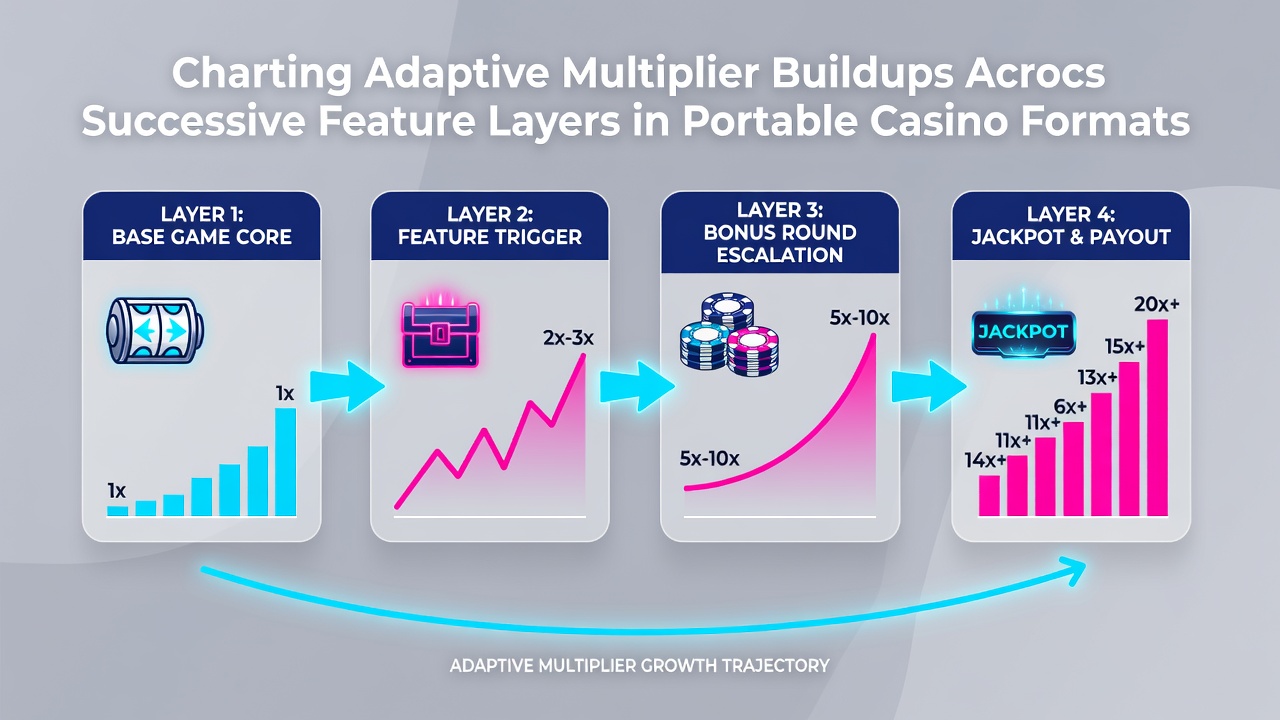
Buildup tracking occurs through session logs that record multiplier states at each layer transition, enabling precise charting of value escalations over multiple features. Analysts use these logs to map how a starting multiplier in the base game evolves when entering a cascade sequence, then further adjusts during a subsequent jackpot chase round. Figures from the American Gaming Association reveal that mobile sessions featuring three or more layered features demonstrate average multiplier growth of 1.8 times the initial value when triggers align consecutively.
Portable formats introduce additional variables such as touch-based interactions that can influence layer progression, since certain gestures activate hidden multipliers within a given stage. Those who have reviewed telemetry data across devices report that tablet sessions often sustain longer chains than smartphone ones due to larger display areas supporting more simultaneous feature elements. External reports from the Canadian Gaming Association confirm similar trends in regulated markets where multiplier tracking tools help verify compliance during live operations.
Comparative Analysis of Layer Transitions
Transitions between layers vary depending on whether a format employs cascading reels or expanding grids, with each approach producing distinct multiplier curves. Cascading systems tend to reset partial values at layer boundaries while preserving overall session totals, whereas grid expansions carry full accumulated multipliers into the next stage without interruption. Evidence from technical reviews shows that adaptive adjustments occur most frequently at the second and third layer points, where the system evaluates prior win counts before applying scaled increments.
Industry data collected through 2026 indicates that formats supporting cross-layer persistence achieve higher engagement metrics in regions outside the UK, including markets overseen by the Australian Communications and Media Authority. These metrics track how often players reach the fourth successive layer, at which point multipliers commonly exceed base values by factors of five or more when combined with random symbol enhancements. Developers continue to refine detection algorithms that identify when a layer buildup risks exceeding platform limits, triggering automatic stabilization routines.
Conclusion
Charting these adaptive multiplier buildups requires attention to sequential dependencies that define how each feature layer references its predecessors in portable casino formats. Available data demonstrate measurable patterns in multiplier scaling that remain consistent across device types and regulatory environments. Continued monitoring through established industry sources will provide further clarity on how these mechanisms evolve in upcoming platform updates.